







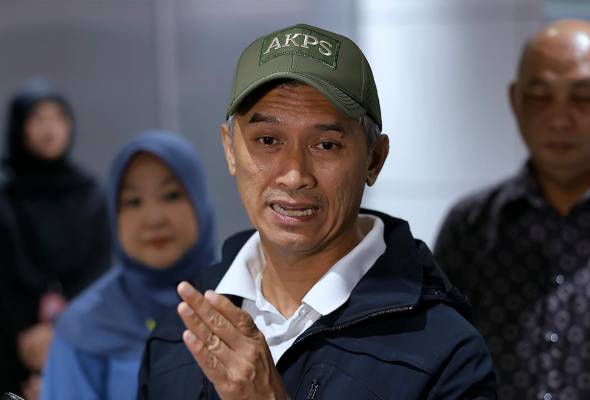
The viral video showing Datuk Seri Mohd Shuhaily Mohd Zain raising his voice at two police officers has predictably triggered another round of debate on social media, where a few minutes of footage can quickly become the basis for judging an entire leadership style. There are those who believe a senior officer should never speak to his subordinates in such a manner, while others see it as the frustration of a man attempting to impose discipline within an enforcement system where mistakes, negligence and misconduct can carry consequences far beyond an uncomfortable conversation in the office.
There is certainly nothing wrong with questioning Shuhaily’s approach. Senior government officials should not be immune from scrutiny simply because they hold powerful positions, and professionalism must apply to the person giving instructions just as much as it applies to those receiving them. However, reducing the entire episode to the fact that Shuhaily shouted risks missing the more important question: what happened before the camera started recording, and what exactly caused a senior enforcement official to become so furious?
This is especially relevant because Shuhaily’s reputation for blunt and sometimes confrontational leadership did not begin with this particular video. During his tenure as Bukit Aman criminal investigation department director, he publicly took a tough position on corruption and unexplained wealth among police officers, including calling for officers in sensitive positions to declare their assets and explain lifestyles that appeared inconsistent with their legitimate incomes. His message was uncomfortable but straightforward: those entrusted with enforcing the law should themselves be prepared to face scrutiny.
That approach appears to have followed him into his present role as director-general of the Malaysian Border Control and Protection Agency (AKPS), an organisation tasked with strengthening Malaysia’s border management and bringing various enforcement functions at international entry points under a more coordinated structure. Shuhaily has previously attracted attention for fiery addresses to enforcement personnel, particularly when speaking about integrity, corruption and officers who fail to perform the responsibilities entrusted to them.
The latest video, therefore, should not be viewed as though Malaysians have suddenly discovered this side of Shuhaily. He has consistently presented himself as an enforcement officer who believes discipline cannot merely exist in circulars, slogans and integrity posters hanging on office walls. Whether one agrees with his delivery is another matter, but his position on accountability has hardly been ambiguous.
There is also a wider institutional issue that should not be ignored. Malaysia’s border checkpoints are not ordinary government counters where administrative mistakes simply result in another form being filled out. Officers stationed there operate on the frontline against illegal entry, smuggling, trafficking, organised crime and other activities that can exploit weaknesses in enforcement. When procedures are ignored or responsibilities are treated casually, the consequences may extend well beyond the officers involved.
This does not mean that shouting should become an acceptable substitute for professional management. Strong leadership still requires boundaries, and any allegation of misconduct involving public officers must ultimately be dealt with through proper investigation and disciplinary procedures. Shuhaily himself should be subjected to the same principle. If he crosses professional boundaries or abuses his authority, his position should not shield him from accountability.
However, there is an equally dangerous tendency to confuse firm leadership with bad leadership simply because the former can occasionally be uncomfortable to watch. Social media naturally magnifies the dramatic part of an incident while removing much of what happened before and after it. The public sees the raised voice, but may know little about the instructions that were previously given, the operational circumstances involved or whether similar problems had occurred before.
That context matters before anyone decides who was right or wrong.
Ultimately, Shuhaily should not be judged by the decibels in a viral video but by the performance of the institution he leads. Malaysians should be asking whether enforcement at the country’s entry points improves, whether corruption and leakages are reduced, whether officers become more accountable and whether criminal syndicates find it increasingly difficult to exploit weaknesses within the system.
If AKPS fails to deliver those outcomes, Shuhaily deserves scrutiny. If his leadership methods cross legitimate professional boundaries, those methods deserve scrutiny too. Accountability cannot operate in only one direction.
But Malaysia should also be careful about creating an environment where senior enforcement officials become more worried about appearing unpleasant on social media than confronting failures within their own organisations. Running an enforcement agency is not a popularity contest, and maintaining discipline will occasionally require conversations that are neither comfortable nor camera-friendly.
Question Shuhaily when there are legitimate reasons to question him, demand explanations when they are necessary, and hold him to the standards he expects from the officers serving beneath him. At the same time, judge his tenure by something more meaningful than a viral clip.
At the end of the day, Malaysia needs border enforcement that works, officers who understand the seriousness of the authority entrusted to them, and leadership willing to confront weaknesses rather than quietly tolerate them.
Let Shuhaily do his job.