

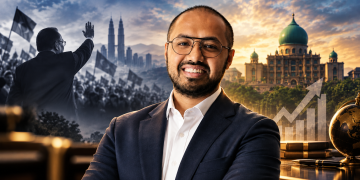




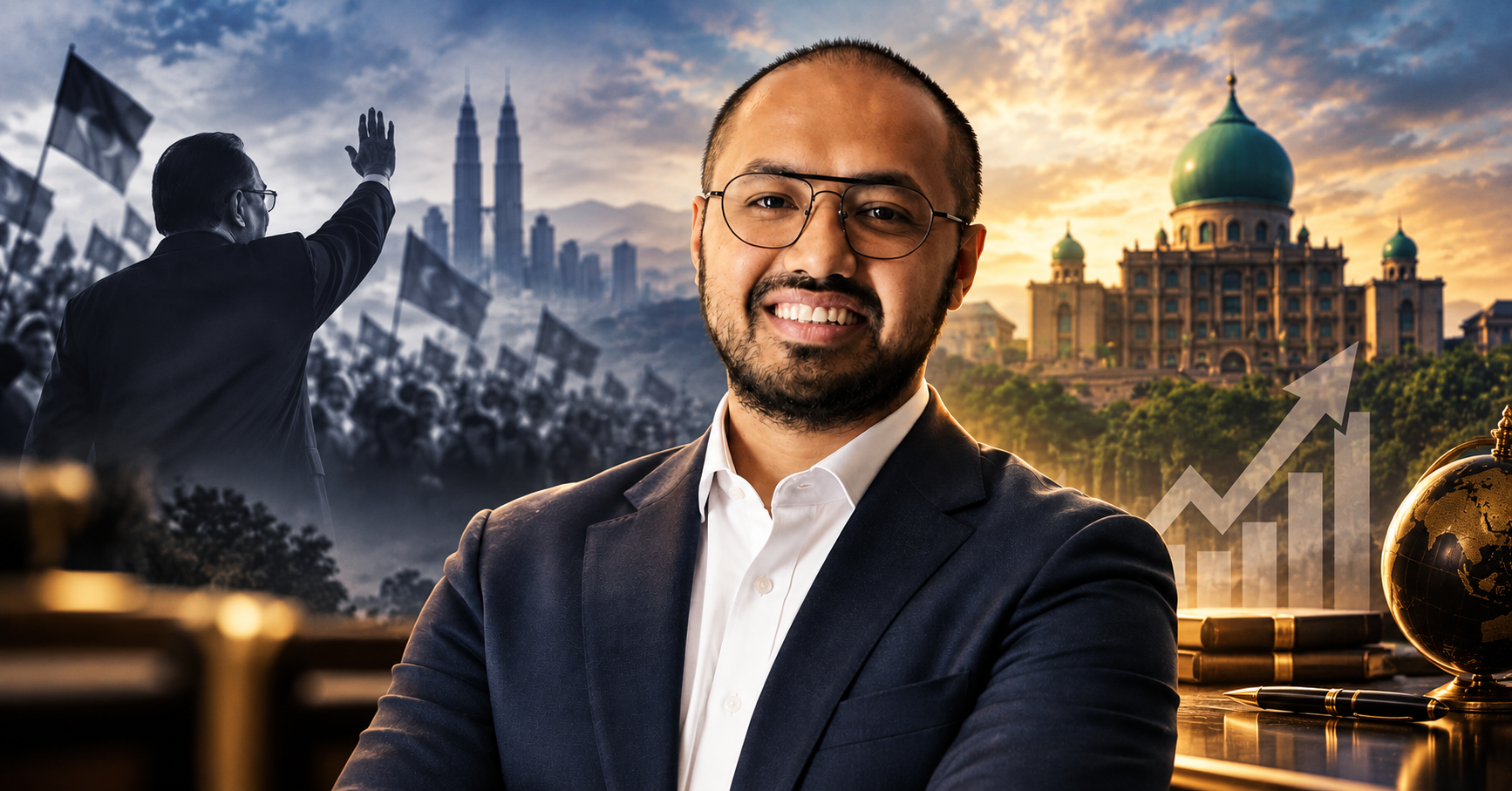
Malaysian politics has produced politicians, businessmen and political operatives in abundance. Datuk Seri Farhash Wafa Salvador Rizal Mubarak is unusual because his career has crossed all three worlds. His rise has also attracted controversy. Critics question whether his close association with Prime Minister Anwar Ibrahim has helped open doors in the corporate world. His supporters see something different: a man who remained loyal when Anwar was far from Putrajaya, understood how political power works, and eventually built a life beyond party politics. Both sides explain why Farhash has become such an interesting figure. The real question now is not how far he can rise while Anwar is prime minister. It is whether what he has built can survive after Anwar leaves office.
Loyalty Before Power
It is easy to be loyal to a prime minister. It is considerably harder to remain loyal to someone when there is no guarantee he will ever become one. Farhash’s association with Anwar predates the 2022 general election. He served as Anwar’s political secretary and was active in PKR, including serving as Perak PKR chairman. His political identity became closely tied to Anwar and the Reformasi movement. That history matters. Politics has a habit of producing new “old friends” whenever someone reaches the top. After victory, suddenly everybody remembers being there from the beginning. Farhash has a stronger claim than most. His relationship with Anwar was established long before being close to Anwar meant being close to federal power. That does not place Farhash beyond scrutiny, nor should loyalty be treated as a substitute for accountability. But it is difficult to understand his rise without recognising that he stayed within Anwar’s orbit through years when the political rewards were far less certain.
From Political Operator to Corporate Player
The more interesting part of Farhash’s story may actually be what happened next. Instead of continuing along the traditional political ladder, party position, candidacy, Parliament and eventually government, Farhash increasingly moved into the corporate world. He was not entering business completely from scratch. He has academic qualifications in finance and business administration, while companies appointing him to senior positions have highlighted his previous experience in business, consultancy and advisory work. His appointment as chairman of 7-Eleven Malaysia Holdings in January 2023 attracted attention. He remained there until May 2025, when he resigned to pursue other business interests. In January 2025, he was also appointed chairman of Key Alliance Group Berhad. Individually, these can be viewed simply as corporate appointments. Collectively, however, they show Farhash developing an identity increasingly separate from formal party politics. That distinction could become important. Political positions are temporary. Lose an election, lose a party position or lose government, and influence can disappear remarkably quickly. Business works differently. Companies, investments and commercial relationships can potentially survive several changes of government. Farhash appears to understand that.
The Controversy Follows Him
But there is no credible way to discuss Farhash’s corporate rise without addressing the questions surrounding it. His long association with Anwar inevitably means his business activities receive greater political scrutiny. Opposition figures and other critics have questioned whether political connections played a role in his corporate advancement. Farhash has rejected serious allegations against him, including publicly denying money-laundering accusations in May 2026 and describing them as defamatory. There has also been scrutiny surrounding corporate disputes involving companies connected to government technology contracts. CNA reported in March 2026, citing sources, that Anwar intervened in a corporate confrontation involving NexG and instructed Farhash to withdraw from an effort concerning control of the company. Such controversies do not automatically establish wrongdoing. Neither should they simply be dismissed because the person involved happens to be politically connected. They make transparency more important. The larger Farhash’s corporate footprint becomes, the greater the scrutiny will be.
Power Outside Putrajaya
Farhash’s trajectory is interesting because it does not resemble the usual Malaysian political career. Most politicians climb through titles: division leader, candidate, assemblyman, MP, deputy minister and minister. Farhash appears to be building something different. A minister exercises considerable power, but that power comes with an expiry date. Governments change. Cabinets change. Elections change careers overnight. Commercial influence is potentially more durable. Companies and investments can operate under BN, PH, PN or whatever coalition arrangement Malaysia produces next. That gives economic power a different lifespan from political office. But durability depends on whether the businesses themselves are genuinely strong. That is where Farhash’s biggest test begins.
What Happens After Anwar?
No prime minister remains in office forever. Eventually, Malaysia will enter a post-Anwar political period. For Farhash, that transition could be more important than anything happening today. Future governments may have little attachment to the Reformasi movement. Some political figures may even view personalities associated with the Anwar administration with suspicion or hostility. History has repeatedly shown that businessmen who become influential during one administration can find themselves exposed when political power changes hands. Farhash therefore faces a simple challenge: can he become known as a businessman who happens to have been close to Anwar, rather than a businessman whose strength is perceived to depend on Anwar? That difference is enormous. His companies and investments will have to withstand commercial scrutiny without constantly requiring political explanations. Corporate governance will matter. Transactions will need to make economic sense. Professional management, credible revenues, assets and wider commercial relationships will become increasingly important. Most importantly, loyalty should not become dependency. Farhash does not have to distance himself from Anwar simply because political circumstances eventually change. Doing so could undermine the loyalty that has been central to his public identity. But personal loyalty and commercial independence are two different things. He can remain loyal to Anwar while building businesses capable of functioning regardless of who occupies Putrajaya.
The Next Chapter
Farhash’s story remains unfinished. His critics will continue questioning his influence and business interests, particularly because he operates at the sensitive intersection of politics and corporate Malaysia. Those questions are part of legitimate public scrutiny. At the same time, reducing his entire career to political connections alone would ignore the longer trajectory that brought him here. There was loyalty. There was positioning. There was business. And there was an obvious attempt to build influence outside conventional political office. Farhash has already shown that he knows how to rise. The harder question is whether he knows how to remain standing when Malaysia’s political environment changes. That will ultimately determine his legacy. If his corporate interests remain strong and defensible regardless of who governs Malaysia, Farhash may eventually be viewed as more than one of Anwar Ibrahim’s long-time political lieutenants. He would have achieved something considerably harder: turning political experience and relationships into an independent power base capable of surviving beyond the political era that helped shape it.