







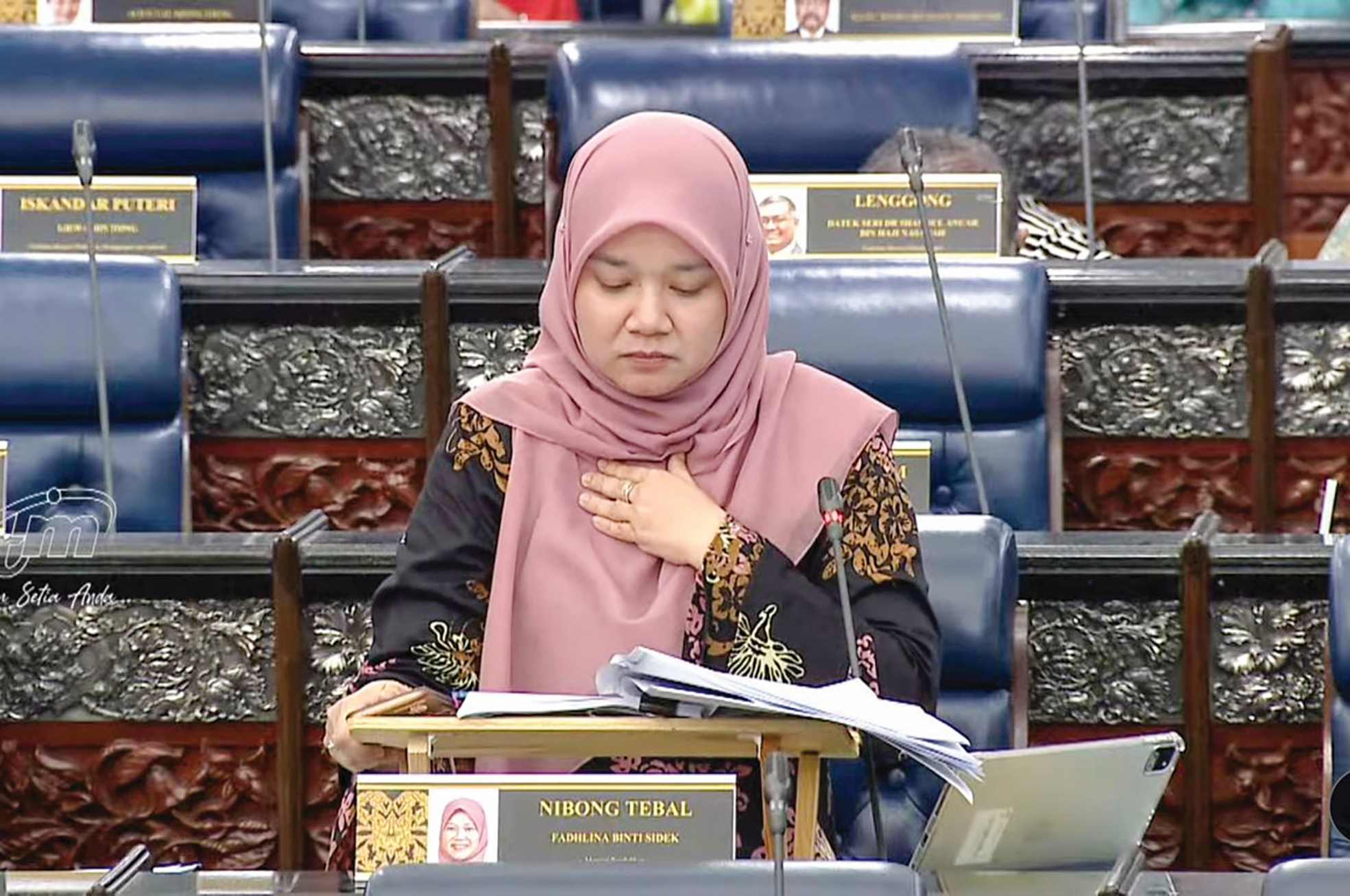
For a few days, a decades-old policy suddenly became one of Malaysia’s most uncomfortable education debates. The issue was a requirement for certain private education institutions, including tuition and other education centres operating under company structures, to maintain at least 30% Bumiputera equity. The provision was not new. It could be traced to a policy framework published in 2006. But its resurfacing raised a much bigger question. How much further should race-based policy extend into education, particularly when different Malaysian communities do not begin from the same institutional starting point?
The Education Ministry has since decided that the minimum 30% Bumiputera equity condition will no longer be imposed on private limited companies operating private educational institutions under its jurisdiction. The ministry said the adjustment was made after discussions with the Investment, Trade and Industry Ministry and was intended to keep participation in education open to those wishing to contribute to the sector. The reversal may have settled the immediate controversy but it has not settled the larger argument.
Non-Bumiputeras Already Navigate a Narrower Road
Any serious discussion about the equity requirement has to begin by acknowledging the wider education landscape. Malaysia’s affirmative-action system was created for historical and socioeconomic reasons. Its objective of increasing Bumiputera participation in education and the economy has shaped public policy for decades. But those policies also mean that Bumiputera students have access to certain institutions and programmes that are either reserved for them or overwhelmingly allocated to them. Take matriculation for instance for the 2026/2027 intake, the government maintained the existing 90% Bumiputera quota, even while guaranteeing places to all SPM 2025 students who obtained at least 10As and applied for matriculation, regardless of race.
Then there is Universiti Teknologi MARA.
UiTM’s own admission information states that admission for Malaysian students is restricted to Bumiputera, while its undergraduate admission FAQ specifies eligibility for Malays, natives of Sabah and Sarawak, and Orang Asli. MARA provides another substantial education ecosystem. Its education financing programmes are specifically designed for eligible Bumiputera students, covering opportunities from foundation and diploma studies through undergraduate and postgraduate education, including studies at selected local and overseas institutions. None of these programmes needs to be dismissed simply because it benefits Bumiputeras. Many have produced graduates, professionals and upward social mobility for families that genuinely needed assistance. But their existence matters when discussing fairness because when a non-Bumiputera family cannot access these particular pathways, it must look elsewhere and “elsewhere” can become expensive.
Private Education Is Often Not a Luxury
There is a tendency to assume that anyone attending private education must come from a wealthy family. That is an increasingly outdated assumption. For some families, private colleges, tuition centres and alternative education providers exist precisely because the pathways available within the public system are limited, intensely competitive or unsuitable for the student’s circumstances. A wealthy family can absorb that difference but a working-class family cannot. A lower-income Chinese or Indian household does not suddenly become affluent because it is non-Bumiputera. A struggling family still has rent, food, transport, tuition fees and education loans to worry about.
Poverty does not check race before entering a home. This is where the 30% equity controversy struck a nerve.
Imagine a teacher who spends years saving money to establish a small tuition centre. The owner pays rent, hires teachers, buys equipment, deals with licensing requirements and slowly builds the centre student by student. The reasonable questions for the government should be straightforward. Are the teachers qualified? Is the building safe? Are students protected? Are fees transparent? Is the education being provided properly?
The ethnicity of the shareholders is much harder to connect directly to the quality of the education received by the child sitting in the classroom.
There Is a Difference Between Helping Someone Enter and Making Someone Else Give Up Equity
Malaysia should continue discussing how to expand Bumiputera participation in business and education but there are different ways of doing it. One approach is to help more Bumiputera educators establish their own institutions: provide affordable financing, business training, premises, grants, mentorship and easier access to capital which creates entrepreneurs. Another approach is to require an existing education business to restructure its ownership according to ethnicity which creates a very different conversation. If Bumiputera participation in private education is considered insufficient, the more sustainable solution is to create more Bumiputera-owned education businesses, not necessarily to insist that every existing business must reproduce the country’s desired equity composition within its own shareholding structure. The distinction matters as one expands the economic pie while the other divides the existing pie differently.
The Question Malaysia Cannot Keep Avoiding
The deeper problem is that Malaysia frequently discusses affirmative action as though the country still fits neatly into the economic conditions of several decades ago.
IThere are wealthy Bumiputeras and poor Bumiputeras.
There are wealthy Chinese and poor Chinese.
There are successful Indian professionals and Indian families struggling to keep their children in school.
There are Bumiputera students who genuinely need government intervention and non-Bumiputera students who need exactly the same help.
Race and economic disadvantage can overlap, but they are not identical. That is why the future debate should not simply be whether Bumiputera assistance should exist. That produces the same political argument Malaysia has repeated for decades. The more useful question is: who needs help, what kind of help do they need, and how can that assistance be delivered without unnecessarily restricting somebody else’s opportunity?
There is room for targeted Bumiputera development. There is also room for stronger needs-based assistance across communities. The two do not have to be enemies.
Education Should Be Where Malaysia Builds Confidence
Education is different from many other industries. A tuition centre is not a government concession. A language school is not a natural-resource licence. A private learning centre is ultimately selling knowledge, skills and teaching. The government’s priority should therefore be the quality of that education. Malaysia should want more good teachers opening centres, more entrepreneurs investing in education technology, more affordable tuition in working-class neighbourhoods and more competition that forces institutions to improve.
If a Malay teacher wants to open a tuition centre, help that teacher succeed. If an Indian teacher wants to open one, let that teacher compete. If a Chinese entrepreneur develops an excellent education model, allow it to grow.
Then regulate all of them firmly on standards, safety, qualifications, transparency and student welfare. That is a much healthier form of competition. The Education Ministry’s decision to remove the 30% requirement therefore matters beyond the businesses directly affected. It offers an opportunity to reconsider what affirmative action should look like in a Malaysia where disadvantage is becoming increasingly complex. The Bumiputera community should not lose programmes that genuinely lift disadvantaged families simply because the country wants reform. But neither should a struggling non-Bumiputera Malaysian be treated as though he or she automatically possesses an economic advantage. That assumption is becoming harder to defend. After nearly seven decades of independence, Malaysia’s next challenge is not to pretend that race has ceased to matter. History, geography and economic inequality make that impossible.
The challenge is to build policies sophisticated enough to recognise something equally important: A poor Malaysian is still poor, regardless of what is written under “race” on a form. And education, more than almost anything else, should be the place where that reality matters.